





From preLighter to Executive Editor: How Samantha Seah helps students find their voice in science
10 December 2025
In this interview, we hear from Samantha Seah, a former preLighter who will soon step into the role of Executive Editor at the Journal of Emerging Investigators. Here, Samantha traces JEI’s origins, explains how student projects are reviewed and supported, describes recent expansions like eiRxiv and teacher resources, and shares what makes volunteering so rewarding.
What is the origin of JEI and its mission?
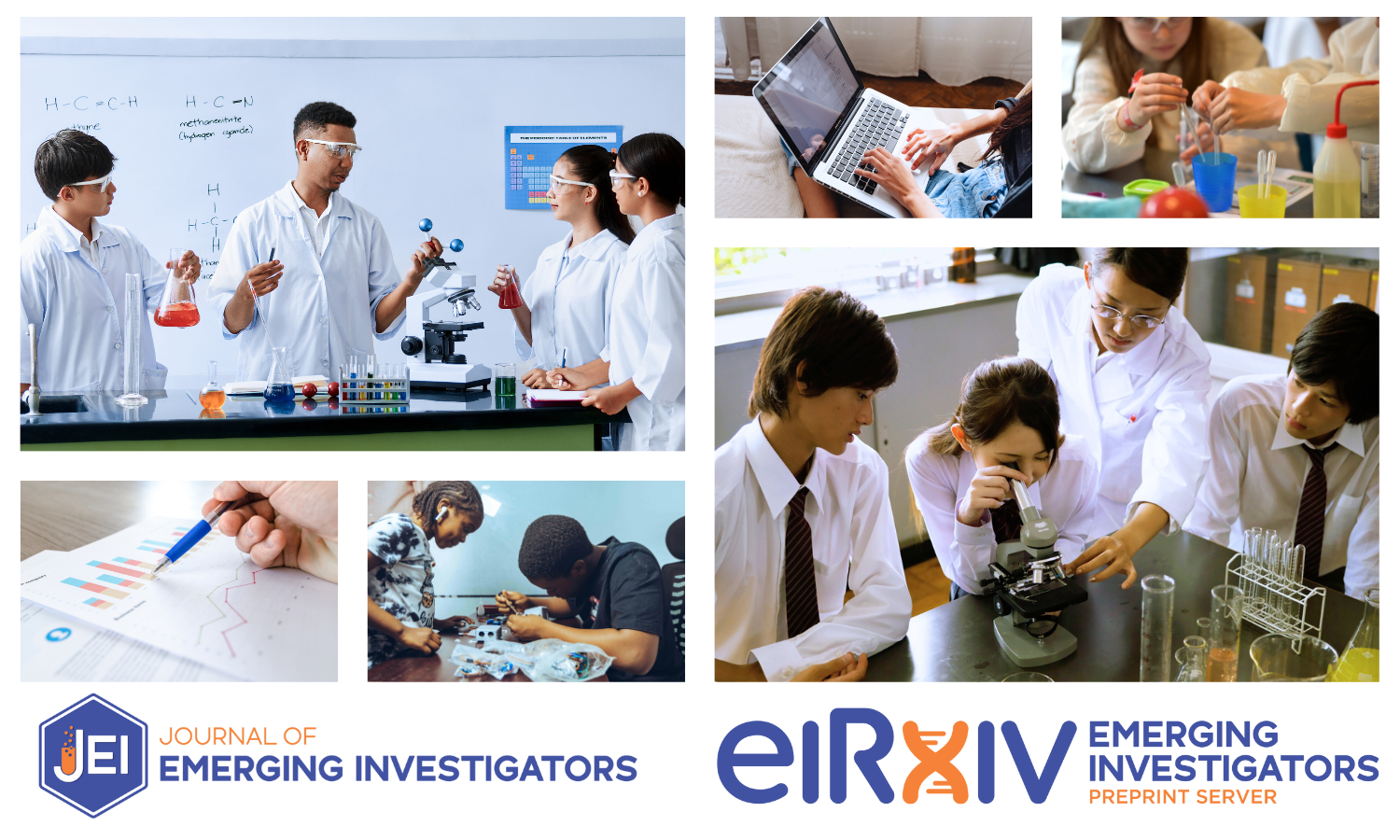
It all started in 2011 with a few Harvard graduate students who were helping at student science fairs. They noticed students put huge effort into projects but had no real outlet afterward, so they launched a journal for student research. The idea was to give pre-university students the chance to share their results, get professional feedback, and learn both the scientific method and scientific communication.
“The idea was to give pre-university students the chance to share their results, get professional feedback, and learn both the scientific method and scientific communication.”
Could you share a bit about how you became involved with the Journal of Emerging Investigators (JEI) and your path to becoming the co-Executive Editor soon?
I began volunteering about two and a half years ago after a former colleague—also a volunteer—suggested it because I’d always been interested in scientific writing and publishing. I signed up as a Reviewer and Associate Editor, was promoted to Managing Editor after about a year, and in early 2025 was invited to step into the Editor-in-Chief role. And with eiRxiv taking off, I’ll actually be transitioning to co-Executive Editor soon! I’ll work with another co-Executive Editor and a small leadership team to oversee both JEI and eiRxiv.
What kinds of projects do students submit to JEI, and how is the process structured?
All sorts really — the main requirement is a stated hypothesis that can be and has been tested. Submissions follow the style of your average research paper: introduction, results, discussion, methods, figures, references, and so on. Projects can come from school, home, or from work done under a professional researcher’s guidance. We also ask that an adult mentor is involved so there’s someone for us to communicate with who can help guide the students as they make revisions.
How does JEI handle the review process for student papers?
We use a fairly traditional process: reviewers (usually graduate students or postdocs) read the manuscript and give feedback, which an associate editor then consolidates into a single response. We check the tone and organise the comments so students can understand and act on the feedback.
How does JEI seek to be inclusive for students from differing backgrounds and locations?
We receive submissions from students all over the world and from different backgrounds. I believe a big part of supporting them is to provide clear help and resources so students everywhere can find what they need in our guide and put a submission together. We want the process to be easy, so a lack of information doesn’t stop anyone from submitting. We also emphasize that we accept all sorts of studies — not just classical lab science but research tied to hobbies and personal interests as well. There isn’t just one kind of research students can do.
“…we accept all sorts of studies — not just classical lab science but research tied to hobbies and personal interests as well.”
What additional programmes or expansions has JEI recently undertaken?
Over the years, we’ve become more than just a journal: we have actually expanded our activities quite a lot. For example, we now have a preprint server, eiRxiv. We also have a programme called ‘Ask a Scientist’ where students can get in touch with our staff members to help them with their research plan, their experiments, and writing their manuscript. In addition, our education team has put together educational resources to support teachers and students and help them make the most of our journal and preprint server. They’ve also created broader lesson plans to help students learn to think, act, and communicate like scientists.
Please tell us about the eiRxiv and its relationship to JEI.
The general mission behind the journal is to help students find their voice in science, give them the opportunity to share their work, and help them to do that by providing the tools and resources they need. At some point we thought, well, preprints are also a big part of the scientific process right now and it would be good to introduce this to students by providing them with the opportunity to post preprints. We also wanted them to be able to share their work more easily compared to our more traditional publication process at the journal, and, in the process of posting a preprint, get feedback from trained reviewers (PhD students and postdocs).
“At some point we thought, well, preprints are also a big part of the scientific process right now and it would good to introduce this to students…”
What are you most excited about in your upcoming role as Executive Editor, especially for JEI and eiRxiv’s future?
One big thing that we’re working on relates to eiRxiv: we’ve developed our own student-friendly submission platform for eiRxiv that’s specially designed for our particular purpose. So that’s something that I’m quite excited about, reinventing the submission process with students in mind. Also, more generally, I’m eager to see how we can even better support students and their teachers, thinking about different ways we can provide students with feedback and resources.
What have you found most rewarding about working with JEI?
I really enjoy when students, or even the senior authors, email us and tell us how much they’ve appreciated the process and how much they’ve learned from it. Yes, for me, that’s really incredible. My key motivation behind all this is really to help students improve their manuscript writing and teach them about scientific communication and the scientific method. So, it is really rewarding to see students and senior authors clearly learn a lot from the process we offer at JEI.
Finally, for those interested in volunteering at JEI and eiRxiv, what would you tell them?
Well, I really enjoy working with students and giving them the skills and toolkit to do science — it’s one of the most rewarding things you can do. I’d tell prospective volunteers to give it a try: it’s fun, highly rewarding, and you’ll learn a lot about scientific editing, writing, and communication.
“I’d tell prospective volunteers to give it a try: it’s fun, highly rewarding, and you’ll learn a lot about scientific editing, writing, and communication.”