









LLM hallucinations in the wild: Large-scale evidence from non-existent citations
Posted on: 13 November 2026
Preprint posted on 8 May 2026

Categories: scientific communication and education
The implementation of large language models (LLMs) and its impact on both our
personal and working lives – and, above all, our way of working – is steadily becoming
clearer. From Google Assistant to citation tools, LLMs have gradually stepped into all
our lives to make us seemingly faster, more efficient and, above all, more productive.
In doing so, we often overlook the technology’s limitations and problems with
potentially far-reaching consequences, including those for interdisciplinary research.
One problem with LLMs that has been recognised since its inception is so-called
‘hallucinating’, whereby a plausible guess is preferable to a delayed – or indeed no –
response to a search query [1]. Whilst hallucinations and the likelihood of hallucinated
responses can be statistically estimated on the basis of models, the actual extent to
which hallucinated AI responses are used remains difficult to grasp as hallucinations
are labour intensive to detect.
Hallucinations can take a wide variety of forms. One of the forms that can best be
studied in a real-world context are hallucinated citations in academia, due to the simple
distinction between an existing reference and a fictional one combined with the
generally rigorous citation practices in academia.
Estimated hallucinated citations? Just the tip of the iceberg
To get to the bottom of the issue of hallucinated citations, the authors of the preprint
developed a pipeline to validate what constitutes a traceable citation. It is important to
note that they have focused their work on a specific type of hallucination: cited
references with non-existent titles. They therefore also needed to establish a ‘baseline
error’, i.e. references that are supposedly hallucinated, as this phenomenon can also
be observed in the pre-LLM era.
For their analysis, the authors used four bibliometric datasets: arXiv, bioRxiv, the Social
Science Research Network as well as PubMed Central, in order to validate their
findings in peer-reviewed settings in already published literature. Using a regression
framework employed in this paper, the authors observed an increase in hallucinated
citations from mid-2024 onwards. The authors were also able to estimate that, in 2025
alone, there were 146,932 hallucinated citations across the four different ‘datasets’
examined. However, the authors also stated that this figure is most likely at the lower
end of the actual expected range.
Who cites hallucinated references?
The increasing number in hallucinations did not originate from heavily contaminated
papers by individual authors, but rather from many different papers, each containing a
moderate number of hallucinations. It is important to note that the largest number of
hallucinated citations was found in the fields of social sciences and computer science.
But who are more prone to using LLMs whilst writing? According to the researchers,
younger authors with fewer to no publications, based in smaller labs, appear to be
more likely to incorporate LLMs into their writing process, resulting in a higher
probability of including hallucinated citations.
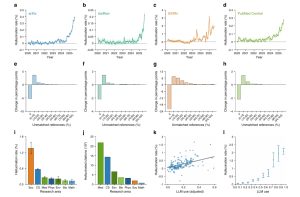
Figure 1: Increase in hallucinated references since the implementation of AI.
The figure shows the increases in detected hallucinated references across the four analysed datasets (a–d).
Furthermore, hallucinated references occur at low frequencies across a large number of publications, rather than being concentrated within individual papers (e–h). Hallucinated references are most prevalent in the fields of computer science and social studies (i–j), and the number of hallucinations increases with the growing use of AI (k-l).
The pattern behind hallucinated citations
Finally, the question arose: what does a typical hallucinated citation look like? Firstly,
hallucinated citations were often accompanied by hallucinated authors. The authors of
the preprint observed that, in cases where an author could be linked to an actual
researcher, these individuals were often exceptionally prolific or highly cited, and most
commonly had male names.
The VerusCite website, a site that validates references, illustrates very clearly in its
‘Hall of Hallucination’ [2] what fabricated references actually look like.
Here are a few examples:
(1) Is ambiguity aversion bad for your health? L. Bradley (2016), The Forum for
Health, Economics and Policy, DOI: 10.1515/fhep-2015-0027
(2) Benchmarking of the cervical cancer care cascade and survival outcomes after
radiation treatment in a low- and middle-income country setting, Grover S;
Jhingran A; Tergas AI (2023), JCO Glob Oncol, DOI: 10.1200/GO.22.00397
What do these findings mean for us as a scientific community?
As LLMs are now also being used for processes such as initial manuscript screenings,
a kind of negative feedback loop is emerging, making it unsurprising that 78.8% of non
existent citations pass moderation and appear on preprint platforms. Furthermore,
85.3% of these hallucinations make their way into the actual published paper, which
suggests that the current practices of journals and, specifically, their quality control
processes are insufficient to detect and rectify hallucinated citations with sufficient
accuracy.
We are not yet technically capable of efficiently identifying hallucinated citations and
systematically excluding them from our system. Nevertheless, it is important to draw
attention to the results of this preprint and the corresponding threat to good scientific
practice. This preprint therefore serves as an appeal to all researchers to adhere to the
ethics of good scientific practice and to critically question whether what they have
written or cited makes sense. Even if it means more work. Particularly in a world of
ever-improving LLMs, we must ensure that convenience does not come at the expense
of critical thinking.
References
[1] Domingues-Dos-Santos, L., Maltarollo, T. F. H., & Skelton-Macedo, M. C. (2026).
AI hallucination risks and mitigation strategies. British dental journal, 240(3), 131.
https://doi.org/10.1038/s41415-026-9583-0
[2] https://veruscite.com/hallucinations
Sign up to customise the site to your preferences and to receive alerts
Register hereAlso in the scientific communication and education category:
AI semantics for biomedical data integration
Theodora Stougiannou

Expanded implementation of Fast & Fair paid peer review reduces time to first decision without reducing review quality in a biology journal
AND
Fast & Fair peer review: a pilot study demonstrating feasibility of rapid, high-quality peer review in a biology journal
Jonathan Townson

Who chooses open peer review and is it an indicator of article quality? An observational study of PLOS journals
Chee Kiang Ewe