










Breaking rules at small scales: ecological and biomechanical diversity in ant terrestrial locomotion
Posted on: 11 November 2026
Preprint posted on 22 October 2026
Ants: efficient and cooperative walkers with a striking energy balance
Selected by Stefan Friedrich Wirth
Categories: animal behavior and cognition, evolutionary biology, zoology
Introduction
In their literature research about locomotion, the authors of this preprint use ants as a model system. Mostly because they display remarkable morphological diversity and are well-suited for study under controlled conditions, yet still permit investigation of physical limitations, complex ecological contexts, and evolutionary relationships. Drawing on morphology, biomechanics, behavioral ecology, and collective behavior, the researchers examined the terrestrial locomotion of ants and compared it, via meta-analyses, with that of other animal groups.
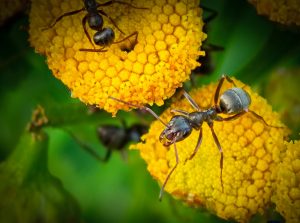
Fig. 1: worker of Formica fusca on Tanacetum vulgare, Berlin, © Stefan F. Wirth, 2025
While ants do not rank among the most species-rich insect groups, the authors note that they certainly belong to a group that must be considered evolutionarily highly successful, accounting for more than 50 percent of the biomass in specific ecosystems such as certain tropical tree canopies and leaf litter. They perform vital ecological functions: shaping the soil, dispersing plant seeds, and often serving as predators within the food web. Researchers attribute this evolutionary success to cooperative foraging, a process that, unlike in other Hymenoptera, must be carried out on foot since ant workers are wingless (Fig. 1).
There is a lack of research integrating the biomechanics of movement with its ecological diversity, a gap the authors aimed to address with this study. This preprint focuses on aspects of locomotion such as speed, maneuverability, and load-bearing capacity. Evolutionary adaptations for walking were shaped by the loss of flight musculature. Because smaller bodies reduce centrifugal forces, while muscle power remains strong, ground-dwelling insects could diversify successfully, and this is ecactly what makes ants so fast. However, this comes at the cost of increased energy expenditure. Locomotion requirements depend on the specific environmental conditions a species faces. Ground characteristics play a major role in this regard. Since these conditions can vary even within a single species’ habitat, locomotor flexibility is required.
Ant locomotion key adaptations
- Morphology: The so-called profurca serves as a key attachment site for muscles that move the head, forelegs, and intersegmental connections. The coxa forms a joint with the pleuron that is responsible for the protraction and retraction of the leg, whereas the femorotibial joint extends and flexes the leg. In ants, the coxal joints and acetabula differ from those of other Hymenoptera and form the basis for their biomechanical capabilities (Fig. 2). The meso- and metacoxal cavities in ants are structurally enclosed and contain a hemispherical coxal base within a cup-like socket, allowing for rotation around two functional axes.
- Musculature: The absence of flight musculature in worker ants allowed for the evolutionary repurposing of the vacated space to accommodate enlarged leg, neck, and metasomal muscles. This enhanced the ants’ ability to support their body weight vertically, transport loads over extended periods, and climb rapidly (L. Aibekova et al., 2022). Promotor, remotor, and rotator muscles along the leg regulate the forward and backward rotation of the limbs. According to the authors, an antagonistic system of depressor and levator muscles at the coxa-trochanter joint is particularly crucial for generating locomotor force. Distal retractor muscles distributed along the leg connect to the unguitractor plate, regulating the use of claws and adhesive pads.
- Kinematics and dynamics: Kinematics describe the movement of the legs and body without considering the associated forces. Parameters quantified in this context include stride length, stride frequency, and the loading factor. In contrast, dynamics focuses on the forces responsible for these movements. Ground reaction forces drive the acceleration of the body’s center of mass (BCoM), while the moments they exert around the BCoM dictate body rotation. These forces contribute to body weight support, propulsion, rotation, and stability. To date, direct measurements of ground reaction forces have been obtained for only eight ant species. Significantly more data exist for kinematic parameters, revealing relationships between running speed, body size, and substrate characteristics.
- Variations in walking speed: Ants coordinate step frequency and step length based on their speed. However, the strength of this relationship varies among different species. In some long-legged species, there may be a stronger dependence on step length. In species of the genus Formica, for example, both step frequency and step length increase with speed; in Linepithema humile (Mayr, 1868), however, there is a strong correlation between walking speed and step frequency, but only a weak one with step length. In general, high speed in arthropods leads to a reduction in the duty factor, though this correlation is not a kinematic necessity. Classic dynamic models describing the transition from walking to running in vertebrates cannot be readily applied to ants.
- Load Transport: Ants transport loads or prey either internally, for example by carrying liquids in their crop, or externally, using their mandibles. The latter presents a significant challenge, as it creates a coupled body-load system that shifts the center of mass. Collective transport allows for the movement of large objects that an individual ant could not handle alone; thus a high degree of cooperation is required
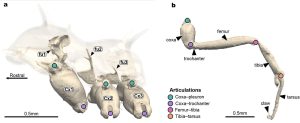
Fig. 2: Skeletal anatomy of the ant mesosoma and legs.
Volume renderings reconstructed from a µ-CT scan of Atta sp. (specimen CASENT0744323). (a) Lateral view of the mesosoma, showing the three left coxae (Cx1, procoxa; Cx2, mesocoxa; Cx3, metacoxa) and the internal furcae (fu1, profurca; fu2, mesofurca; fu3, metafurca), through a semi-transparent exoskeleton. (b) Frontal view of the prothoracic (fore) leg, comprising five segments and a terminal claw. Four articulations are indicated: the coxa–pleuron and coxa–trochanter joints, shown in both panels, and the femur–tibia and tibia–tarsus joints, shown only in (b). Scan data were obtained from Antscan (Katzke et al., 2026) and are available at https://www.antscan.info.
By AlexandreCasadei-Ferreira &DavidLabonte (2026), licensed under creative commons http://creativecommons.org/licenses/by/4.0/
Why I highlight this preprint
As the efficiency of cooperative working is not enough to explain the evolutionary success of ants, focusing on their locomotion makes sense. A selection pressure stabilized the full reduction of the wings in workers of this Hymenoptera group. It was obvious that this favoured specific adaptations to improve locomotion, but a detailed comparative summary about their mode of walking was missing so far.
Fundamental behaviors are frequently quantified but rarely qualified. This is due to a scarcity of adequate datasets, the difficulty of securing research funding for such basic science, and a lack of interest among many researchers. It is all the more compelling, therefore, that the authors have managed to bring together such a vast body of knowledge, incorporating a wide range of perspectives, to reveal that ant locomotion is far from trivial; rather, it is highly complex.
Questions to the authors
- There is a remarkable diversity of specialized adaptations for locomotion across various ant groups. Anatomically and kinetically, however, one gets the impression that there are at least fundamental commonalities regarding their walking locomotion. How, then, can one explain the evolutionary emergence of occasional, highly divergent strategies, such as the rolling locomotion employed by the ant Myrmecina graminicola when it feels threatened or jumping in some other taxa?
- Beyond their highly efficient walking, I also notice a certain restlessness in ants, which can make photographing them quite challenging. Is this constant state of motion purely a matter of energetics and kinetics, a way to maintain locomotor efficiency, or is it an additional strategy designed to confuse potential predators or prey?
- This work provides an impressive illustration of how complex internal anatomy (muscles) and external morphology (joints) are adapted to the efficient walking locomotion of ant workers. I suspect that these adaptations must have evolved in a gradual, step-by-step manner. What environmental or lifestyle scenarios have been proposed to explain how a group that is largely wingless could have evolved from a fully winged hymenopteran ancestor? What might the decisive selective pressures have been?
Future Perspectives
According to the authors, there is still a lack of comprehensive comparative data (in areas such as the relationship between joint morphology and function), as many studies are limited to a small number of model species. Yet, macroevolutionary questions regarding the diversity of locomotion modes in ants rely on such data. Consequently, the compilation of data from existing literature presented here could encourage broader, more extensive research approaches.
Reference
L. Aibekova, B.E. Boudinot, R.G. Georg Beutel, A. Richter, R.A. Keller, F. Hita-Garcia, and E.P. Economo. The skeletomuscular system of the mesosoma of Formica rufa workers (Hymenoptera: Formicidae). Insect Systematics and Diversity, 6(2): 2, 2022.
Read preprint
Sign up to customise the site to your preferences and to receive alerts
Register hereAlso in the animal behavior and cognition category:
Mice sense Moon and Sun
Jeny Jose

Drift drives phenotypic evolution in a rapid island radiation
Zoha Sadaqat

Behavioral characteristics of an extremely old rhesus macaque in a zoo: Dementia-like symptoms and implications for quality of life of geriatric animals
Stefan Friedrich Wirth

Also in the evolutionary biology category:
Breaking rules at small scales: ecological and biomechanical diversity in ant terrestrial locomotion
Stefan Friedrich Wirth
A single genetic innovation at the origin of plant terrestrialization
Naveenkumar Muthiah

Modes of natural selection on maternal and zygotic gene expression in Drosophila melanogaster embryos
Girish Kale, preLights peer support

Also in the zoology category:
Breaking rules at small scales: ecological and biomechanical diversity in ant terrestrial locomotion
Stefan Friedrich Wirth
Drift drives phenotypic evolution in a rapid island radiation
Zoha Sadaqat
Behavioral characteristics of an extremely old rhesus macaque in a zoo: Dementia-like symptoms and implications for quality of life of geriatric animals
Stefan Friedrich Wirth
preLists in the animal behavior and cognition category:
Biologists @ 100 conference preList
This preList aims to capture all preprints being discussed at the Biologists @100 conference in Liverpool, UK, either as part of the poster sessions or the (flash/short/full-length) talks.
| List by | Reinier Prosee, Jonathan Townson |
9th International Symposium on the Biology of Vertebrate Sex Determination
This preList contains preprints discussed during the 9th International Symposium on the Biology of Vertebrate Sex Determination. This conference was held in Kona, Hawaii from April 17th to 21st 2023.
| List by | Martin Estermann |
Bats
A list of preprints dealing with the ecology, evolution and behavior of bats
| List by | Baheerathan Murugavel |
FENS 2020
A collection of preprints presented during the virtual meeting of the Federation of European Neuroscience Societies (FENS) in 2020
| List by | Ana Dorrego-Rivas |
Also in the evolutionary biology category:
‘In preprints’ from Development 2026
A list of the preprints featured in Development's 'In preprints' articles, as part of the new Preprint Editors initiative
| List by | Clarisse Brunet Avalos et al. |
Santa Cruz Developmental Biology Meeting 2026
This preList brings together a selection of preprints discussed at the Santa Cruz Developmental Biology Meeting 2026, held at UC Santa Cruz with the theme “Biomedicine, Biomechanics, and the Biosphere.” Reflecting the meeting’s broad scientific scope, from development and regeneration to evolution, tissue mechanics, and emerging technologies, this curated collection showcases work that contributed to conversations throughout the meeting.
| List by | Ingrid Tsang |
SciELO preprints – From 2025 onwards
SciELO has become a cornerstone of open, multilingual scholarly communication across Latin America. Its preprint server, SciELO preprints, is expanding the global reach of preprinted research from the region (for more information, see our interview with Carolina Tanigushi). This preList brings together biological, English language SciELO preprints to help readers discover emerging work from the Global South. By highlighting these preprints in one place, we aim to support visibility, encourage early feedback, and showcase the vibrant research communities contributing to SciELO’s open science ecosystem.
| List by | Carolina Tanigushi |
November in preprints – DevBio & Stem cell biology
preLighters with expertise across developmental and stem cell biology have nominated a few developmental and stem cell biology (and related) preprints posted in November they’re excited about and explain in a single paragraph why. Concise preprint highlights, prepared by the preLighter community – a quick way to spot upcoming trends, new methods and fresh ideas.
| List by | Aline Grata et al. |
October in preprints – DevBio & Stem cell biology
Each month, preLighters with expertise across developmental and stem cell biology nominate a few recent developmental and stem cell biology (and related) preprints they’re excited about and explain in a single paragraph why. Short, snappy picks from working scientists — a quick way to spot fresh ideas, bold methods and papers worth reading in full. These preprints can all be found in the October preprint list published on the Node.
| List by | Deevitha Balasubramanian et al. |
October in preprints – Cell biology edition
Different preLighters, with expertise across cell biology, have worked together to create this preprint reading list for researchers with an interest in cell biology. This month, most picks fall under (1) Cell organelles and organisation, followed by (2) Mechanosignaling and mechanotransduction, (3) Cell cycle and division and (4) Cell migration
| List by | Matthew Davies et al. |
Biologists @ 100 conference preList
This preList aims to capture all preprints being discussed at the Biologists @100 conference in Liverpool, UK, either as part of the poster sessions or the (flash/short/full-length) talks.
| List by | Reinier Prosee, Jonathan Townson |
‘In preprints’ from Development 2022-2023
A list of the preprints featured in Development's 'In preprints' articles between 2022-2023
| List by | Alex Eve, Katherine Brown |
preLights peer support – preprints of interest
This is a preprint repository to organise the preprints and preLights covered through the 'preLights peer support' initiative.
| List by | preLights peer support |
EMBO | EMBL Symposium: The organism and its environment
This preList contains preprints discussed during the 'EMBO | EMBL Symposium: The organism and its environment', organised at EMBL Heidelberg, Germany (May 2023).
| List by | Girish Kale |
9th International Symposium on the Biology of Vertebrate Sex Determination
This preList contains preprints discussed during the 9th International Symposium on the Biology of Vertebrate Sex Determination. This conference was held in Kona, Hawaii from April 17th to 21st 2023.
| List by | Martin Estermann |
EMBL Synthetic Morphogenesis: From Gene Circuits to Tissue Architecture (2021)
A list of preprints mentioned at the #EESmorphoG virtual meeting in 2021.
| List by | Alex Eve |
Planar Cell Polarity – PCP
This preList contains preprints about the latest findings on Planar Cell Polarity (PCP) in various model organisms at the molecular, cellular and tissue levels.
| List by | Ana Dorrego-Rivas |
TAGC 2020
Preprints recently presented at the virtual Allied Genetics Conference, April 22-26, 2020. #TAGC20
| List by | Maiko Kitaoka et al. |
ECFG15 – Fungal biology
Preprints presented at 15th European Conference on Fungal Genetics 17-20 February 2020 Rome
| List by | Hiral Shah |
COVID-19 / SARS-CoV-2 preprints
List of important preprints dealing with the ongoing coronavirus outbreak. See http://covidpreprints.com for additional resources and timeline, and https://connect.biorxiv.org/relate/content/181 for full list of bioRxiv and medRxiv preprints on this topic
| List by | Dey Lab, Zhang-He Goh |
1
SDB 78th Annual Meeting 2019
A curation of the preprints presented at the SDB meeting in Boston, July 26-30 2019. The preList will be updated throughout the duration of the meeting.
| List by | Alex Eve |
Pattern formation during development
The aim of this preList is to integrate results about the mechanisms that govern patterning during development, from genes implicated in the processes to theoritical models of pattern formation in nature.
| List by | Alexa Sadier |
Also in the zoology category:
SciELO preprints – From 2025 onwards
SciELO has become a cornerstone of open, multilingual scholarly communication across Latin America. Its preprint server, SciELO preprints, is expanding the global reach of preprinted research from the region (for more information, see our interview with Carolina Tanigushi). This preList brings together biological, English language SciELO preprints to help readers discover emerging work from the Global South. By highlighting these preprints in one place, we aim to support visibility, encourage early feedback, and showcase the vibrant research communities contributing to SciELO’s open science ecosystem.
| List by | Carolina Tanigushi |
Biologists @ 100 conference preList
This preList aims to capture all preprints being discussed at the Biologists @100 conference in Liverpool, UK, either as part of the poster sessions or the (flash/short/full-length) talks.
| List by | Reinier Prosee, Jonathan Townson |
Bats
A list of preprints dealing with the ecology, evolution and behavior of bats
| List by | Baheerathan Murugavel |