






Enzymatic bromination of native peptides for late-stage structural diversification via Suzuki-Miyaura coupling
Posted on: 31 December 2025
Preprint posted on 19 December 2025
Ready, set, brominate: RebH and engineered variant for bromination of peptidyl-Trp residues
Selected by Zhang-He Goh
Categories: biochemistry, synthetic biology
Why I chose to highlight this preprint
Biomolecule modification is a fascinating transformation that has multiple scientific and medical applications. In this preprint, the authors developed an enzymatic method for tryptophan-specific bromination. The power in the enzymatic approach lies in its orthogonality to chemical reactions: enzymes catalyse highly specific transformations to occur under mild conditions, so most functional handles for chemical reactions can be tolerated.
I particularly liked that Bridge and co-workers not just described the discovery and development of RebH and its variant 4V for tryptophan bromination, but also demonstrated the application and impact of their work. Specifically, the authors showed that their enzymatic approach could modify key substrates and that the resultant products were amenable to further diversification. The authors also demonstrated that these modified biomolecules could be applied to several areas beyond the transformation itself.
Background
Tryptophan, being one of the rarest amino acids, is an attractive target for selective modification. However, to date most chemical methods to functionalise tryptophan are not sufficiently selective for tryptophan over cysteine, histidine, and tyrosine. To overcome these limitations associated with chemical methods for tryptophan modification, the authors instead opted for an enzymatic approach involving the use of flavin-dependent halogenases (FDHs).
Key findings
Bridge and co-workers first started by establishing the bromination of RebH and its variant 4V on peptide substrates (Figure 1). The authors tested the ability of both enzymes to brominate a panel of synthesised Trp-containing peptides, noting that both RebH and 4V exhibited similar bromination activity on these substrates. Bridge and co-workers then performed further experiments using over 110 dipeptide and tripeptide substrates to investigate the impact of peptide sequence and their structural features on RebH and 4V activity, allowing them to identify hydrogen-bonding interactions at the enzymes’ active sites that are key to the enzymatic reaction.
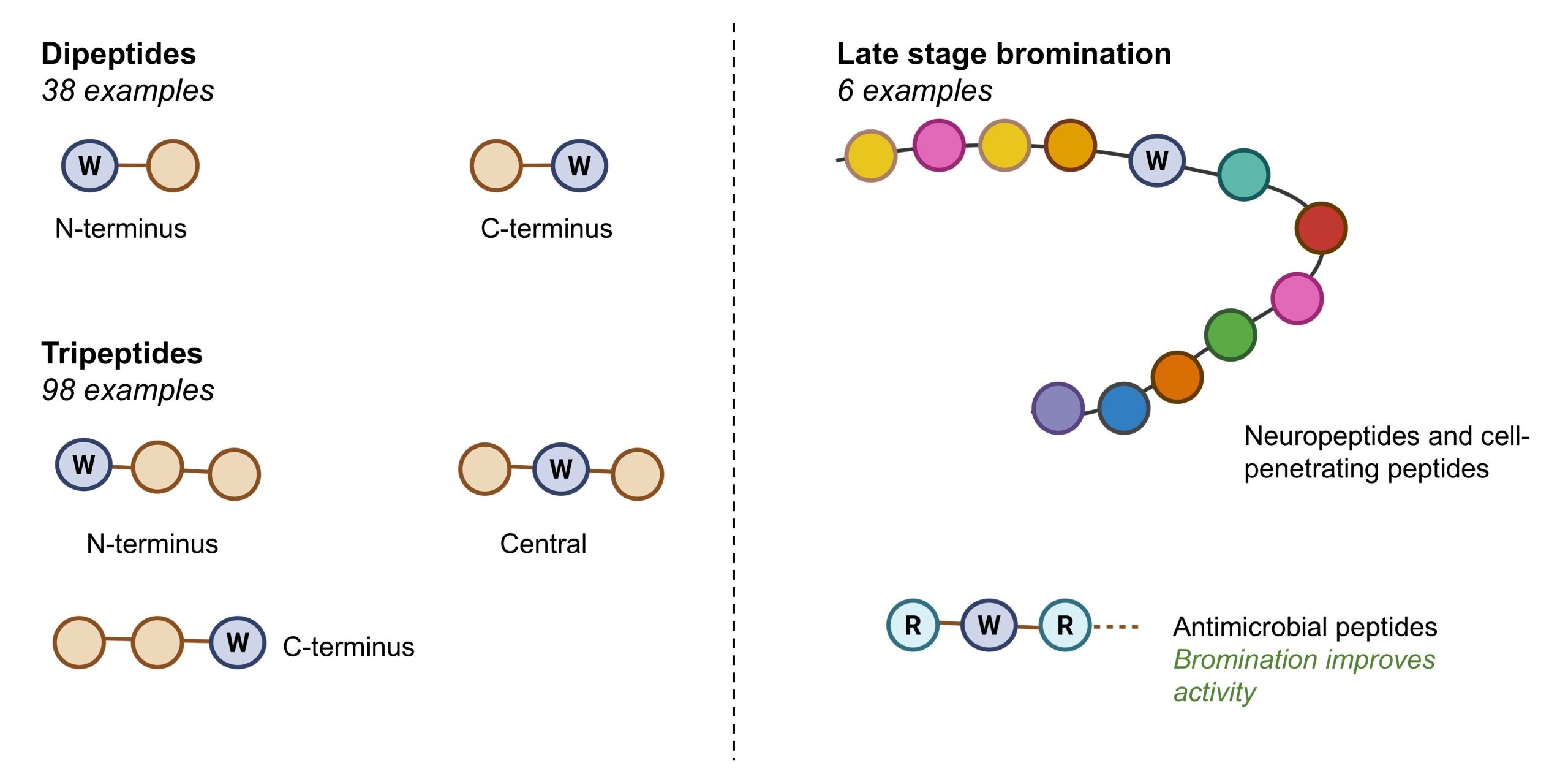
Figure 1. Bromination of RebH and its variant 4V on various peptide substrates.
With this structural understanding in hand, Bridge and co-workers further focussed on the ability of 4V to catalyse late-stage bromination of peptides containing Trp residues. Here, the authors investigated the substrate scope (that is, the breadth of substrates that could be brominated by 4V) and showed that 4V could brominate several neuropeptides, cell-penetrating peptides, as well as antimicrobial peptides. The authors hypothesised that brominating antimicrobial peptides would increase their antimicrobial activity by improving their hydrophobicity and enhancing membrane permeability; this was confirmed using an E. coli growth inhibition assay.
Finally, Bridge and co-workers demonstrated that 4V could brominate more complicated peptides and that the resultant derivatives could undergo further functionalisation (Figure 2). Here, two specific uses were illustrated: (a) the subsequent generation of a fluorescent probe for cellular peptide uptake with a naphthyl-modified peptide, as well as (b) the diversification of endomorphin-1, a μ opioid receptor agonist, to create analogues with modified activity.
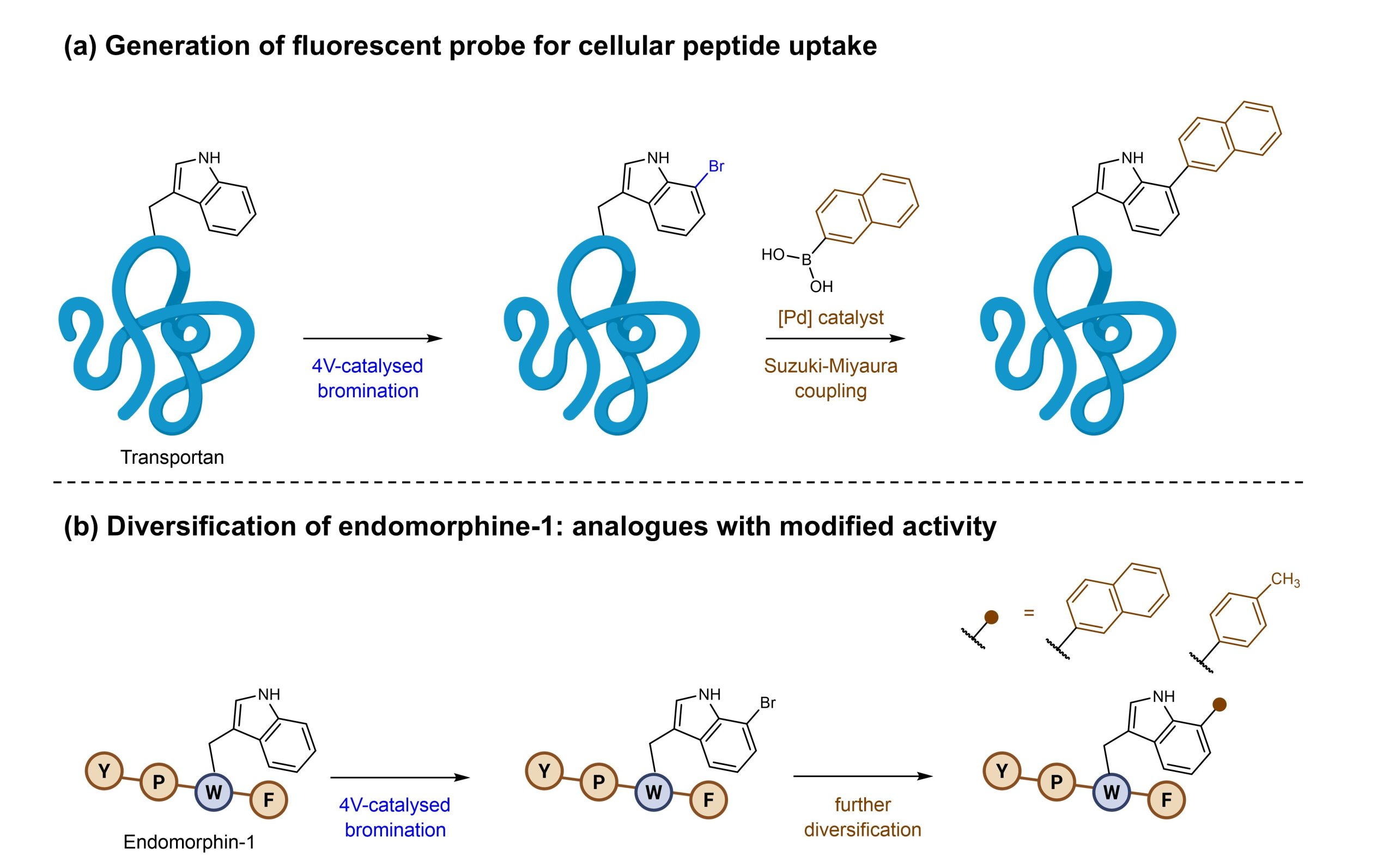
Figure 2. Bromination of peptides followed by further functionalisation of the resultant derivatives.
Future directions
The large scope of this work by Bridge and co-workers, along with the downstream applications that they have demonstrated in this preprint, lends itself to multiple potential directions for development. In this post, I offer three such ways in which I foresee that this research could be expanded.
First, the study that the authors performed on the substrates led to the identification of several interactions underlying enzymatic activity, which could be applied to rational design of enzymes and allow researchers to discover other enzyme analogues exhibiting improved activity. Next-generation enzyme analogues could become (a) more promiscuous in accepting a wider scope of substrates, (b) more selective for bromination at different positions on the tryptophan residue (some of which are more challenging than others), and (c) better at functionalising challenging substrates.
Second, subsequent studies on enzyme stability and reusability will be key to scaling up the production of these enzymes. These studies are essential for this work to be more easily adapted by potential industrial partners, and will eventually be useful in moving the enzymatic transformation from a small lab scale to an industrial one. Associated studies in this field will involve not just the enzyme itself, but also more extensive studies on its expression in different cell lines and under different growth conditions.
Third, the enzymatic bromination described in this preprint can be expanded further to potentially include other reactions. One such way forward is to introduce other forms of halogenation, such as chlorination and iodination, which would be useful in further modulating the peptides’ physicochemical properties. A more ambitious goal would be to use these enzymes to perform other fascinating reactions such as azidation.
Acknowledgements
Images created using Microsoft Powerpoint, ChemDraw, and BioRender.
doi: https://doi.org/10.1242/prelights.42575
Read preprint (No Ratings Yet)
Sign up to customise the site to your preferences and to receive alerts
Register hereAlso in the biochemistry category:
4,5-dihydroxyhexanoic acid is a robust circulating and urine marker of mitochondrial disease and its severity
Hannah Pletcher

Small Molecule Agonists of TREM2 Reprogram Microglia and Protect Synapses in Human Alzheimer’s Models
Dina Kabbara

Active flows drive clustering and sorting of membrane components with differential affinity to dynamic actin cytoskeleton
Teodora Piskova

Also in the synthetic biology category:
Enzymatic bromination of native peptides for late-stage structural diversification via Suzuki-Miyaura coupling
Zhang-He Goh
Enhancer cooperativity can compensate for loss of activity over large genomic distances
Milan Antonovic

Discovery and Validation of Context-Dependent Synthetic Mammalian Promoters
Jessica L. Teo

preLists in the biochemistry category:
Keystone Symposium on Stem Cell Models in Embryology 2026
The Keystone Symposium on Stem Cell Models in Embryology, 2026, was organised by Jun Wu (UT Southwestern), Jianping Fu (University of Michigan) and Miki Ebisuya (TU Dresden) and held at Asilomar Conference Grounds in California (US). The meeting discussed recent advances made in establishing stem-cell-based embryo models, what fundamental insights into developmental processes have been gleaned from them, as well as how they are beginning to be applied more widely. This prelist contains preprints by presenters at the talk and poster sessions at the conference, which our Reviews Editor in attendance spotted. Please do reach out to preLights@biologists.com if you notice any that we’ve missed.
| List by | Ingrid Tsang |
September in preprints – Cell biology edition
A group of preLighters, with expertise in different areas of cell biology, have worked together to create this preprint reading list. This month, categories include: (1) Cell organelles and organisation, (2) Cell signalling and mechanosensing, (3) Cell metabolism, (4) Cell cycle and division, (5) Cell migration
| List by | Sristilekha Nath et al. |
July in preprints – the CellBio edition
A group of preLighters, with expertise in different areas of cell biology, have worked together to create this preprint reading lists for researchers with an interest in cell biology. This month, categories include: (1) Cell Signalling and Mechanosensing (2) Cell Cycle and Division (3) Cell Migration and Cytoskeleton (4) Cancer Biology (5) Cell Organelles and Organisation
| List by | Girish Kale et al. |
June in preprints – the CellBio edition
A group of preLighters, with expertise in different areas of cell biology, have worked together to create this preprint reading lists for researchers with an interest in cell biology. This month, categories include: (1) Cell organelles and organisation (2) Cell signaling and mechanosensation (3) Genetics/gene expression (4) Biochemistry (5) Cytoskeleton
| List by | Barbora Knotkova et al. |
May in preprints – the CellBio edition
A group of preLighters, with expertise in different areas of cell biology, have worked together to create this preprint reading lists for researchers with an interest in cell biology. This month, categories include: 1) Biochemistry/metabolism 2) Cancer cell Biology 3) Cell adhesion, migration and cytoskeleton 4) Cell organelles and organisation 5) Cell signalling and 6) Genetics
| List by | Barbora Knotkova et al. |
Keystone Symposium – Metabolic and Nutritional Control of Development and Cell Fate
This preList contains preprints discussed during the Metabolic and Nutritional Control of Development and Cell Fate Keystone Symposia. This conference was organized by Lydia Finley and Ralph J. DeBerardinis and held in the Wylie Center and Tupper Manor at Endicott College, Beverly, MA, United States from May 7th to 9th 2025. This meeting marked the first in-person gathering of leading researchers exploring how metabolism influences development, including processes like cell fate, tissue patterning, and organ function, through nutrient availability and metabolic regulation. By integrating modern metabolic tools with genetic and epidemiological insights across model organisms, this event highlighted key mechanisms and identified open questions to advance the emerging field of developmental metabolism.
| List by | Virginia Savy, Martin Estermann |
April in preprints – the CellBio edition
A group of preLighters, with expertise in different areas of cell biology, have worked together to create this preprint reading lists for researchers with an interest in cell biology. This month, categories include: 1) biochemistry/metabolism 2) cell cycle and division 3) cell organelles and organisation 4) cell signalling and mechanosensing 5) (epi)genetics
| List by | Vibha SINGH et al. |
Biologists @ 100 conference preList
This preList aims to capture all preprints being discussed at the Biologists @100 conference in Liverpool, UK, either as part of the poster sessions or the (flash/short/full-length) talks.
| List by | Reinier Prosee, Jonathan Townson |
February in preprints – the CellBio edition
A group of preLighters, with expertise in different areas of cell biology, have worked together to create this preprint reading lists for researchers with an interest in cell biology. This month, categories include: 1) biochemistry and cell metabolism 2) cell organelles and organisation 3) cell signalling, migration and mechanosensing
| List by | Barbora Knotkova et al. |
Community-driven preList – Immunology
In this community-driven preList, a group of preLighters, with expertise in different areas of immunology have worked together to create this preprint reading list.
| List by | Felipe Del Valle Batalla et al. |
January in preprints – the CellBio edition
A group of preLighters, with expertise in different areas of cell biology, have worked together to create this preprint reading lists for researchers with an interest in cell biology. This month, categories include: 1) biochemistry/metabolism 2) cell migration 3) cell organelles and organisation 4) cell signalling and mechanosensing 5) genetics/gene expression
| List by | Barbora Knotkova et al. |
BSCB-Biochemical Society 2024 Cell Migration meeting
This preList features preprints that were discussed and presented during the BSCB-Biochemical Society 2024 Cell Migration meeting in Birmingham, UK in April 2024. Kindly put together by Sara Morais da Silva, Reviews Editor at Journal of Cell Science.
| List by | Reinier Prosee |
Peer Review in Biomedical Sciences
Communication of scientific knowledge has changed dramatically in recent decades and the public perception of scientific discoveries depends on the peer review process of articles published in scientific journals. Preprints are key vehicles for the dissemination of scientific discoveries, but they are still not properly recognized by the scientific community since peer review is very limited. On the other hand, peer review is very heterogeneous and a fundamental aspect to improve it is to train young scientists on how to think critically and how to evaluate scientific knowledge in a professional way. Thus, this course aims to: i) train students on how to perform peer review of scientific manuscripts in a professional manner; ii) develop students' critical thinking; iii) contribute to the appreciation of preprints as important vehicles for the dissemination of scientific knowledge without restrictions; iv) contribute to the development of students' curricula, as their opinions will be published and indexed on the preLights platform. The evaluations will be based on qualitative analyses of the oral presentations of preprints in the field of biomedical sciences deposited in the bioRxiv server, of the critical reports written by the students, as well as of the participation of the students during the preprints discussions.
| List by | Marcus Oliveira et al. |
CellBio 2022 – An ASCB/EMBO Meeting
This preLists features preprints that were discussed and presented during the CellBio 2022 meeting in Washington, DC in December 2022.
| List by | Nadja Hümpfer et al. |
20th “Genetics Workshops in Hungary”, Szeged (25th, September)
In this annual conference, Hungarian geneticists, biochemists and biotechnologists presented their works. Link: http://group.szbk.u-szeged.hu/minikonf/archive/prg2021.pdf
| List by | Nándor Lipták |
Fibroblasts
The advances in fibroblast biology preList explores the recent discoveries and preprints of the fibroblast world. Get ready to immerse yourself with this list created for fibroblasts aficionados and lovers, and beyond. Here, my goal is to include preprints of fibroblast biology, heterogeneity, fate, extracellular matrix, behavior, topography, single-cell atlases, spatial transcriptomics, and their matrix!
| List by | Osvaldo Contreras |
ASCB EMBO Annual Meeting 2019
A collection of preprints presented at the 2019 ASCB EMBO Meeting in Washington, DC (December 7-11)
| List by | Madhuja Samaddar et al. |
EMBL Seeing is Believing – Imaging the Molecular Processes of Life
Preprints discussed at the 2019 edition of Seeing is Believing, at EMBL Heidelberg from the 9th-12th October 2019
| List by | Dey Lab |
Cellular metabolism
A curated list of preprints related to cellular metabolism at Biorxiv by Pablo Ranea Robles from the Prelights community. Special interest on lipid metabolism, peroxisomes and mitochondria.
| List by | Pablo Ranea Robles |
MitoList
This list of preprints is focused on work expanding our knowledge on mitochondria in any organism, tissue or cell type, from the normal biology to the pathology.
| List by | Sandra Franco Iborra |
Also in the synthetic biology category:
‘In preprints’ from Development 2022-2023
A list of the preprints featured in Development's 'In preprints' articles between 2022-2023
| List by | Alex Eve, Katherine Brown |
EMBL Synthetic Morphogenesis: From Gene Circuits to Tissue Architecture (2021)
A list of preprints mentioned at the #EESmorphoG virtual meeting in 2021.
| List by | Alex Eve |
EMBL Conference: From functional genomics to systems biology
Preprints presented at the virtual EMBL conference "from functional genomics and systems biology", 16-19 November 2020
| List by | Jesus Victorino |
Antimicrobials: Discovery, clinical use, and development of resistance
Preprints that describe the discovery of new antimicrobials and any improvements made regarding their clinical use. Includes preprints that detail the factors affecting antimicrobial selection and the development of antimicrobial resistance.
| List by | Zhang-He Goh |
Advances in Drug Delivery
Advances in formulation technology or targeted delivery methods that describe or develop the distribution of small molecules or large macromolecules to specific parts of the body.
| List by | Zhang-He Goh |