






HiExM Enables Scalable Mapping of Organelle Morphology and Spatial Heterogeneity
Posted on: 19 October 2026
Preprint posted on 14 July 2026
HiExM meets machine learning, revealing cellular patterns beyond the average.
Selected by Dina Kabbara
Categories: bioinformatics, cell biology
Background
Studying individual organelles at scale is hard. Many sit near the diffraction limit of light (~200 nm), so neighboring organelles often blur together and are difficult to segment (Sahl et al., 2017). Electron microscopy resolves ultrastructure but does not scale easily or allow protein-specific, multiplexed measurements (Klumperman et al., 2014). Super-resolution methods are often too slow or have too small a field of view (Sahl et al., 2017). Most studies therefore fall back on bulk measurements, such as overall intensity or colocalization, which hide organelle-to-organelle variability.
Late endosomes and lysosomes (LELs) illustrate the problem. They range from ~100 nm to over 1 µm and are densely packed (Klumperman et al., 2014). Their function varies with size, position, and clustering (Bussi et al., 2024). LAMP1, a protein on their membrane used as a fluorescent tag, marks the whole compartment but cannot separate one organelle from the next at conventional resolution (Bond et al., 2025).
Expansion microscopy (ExM) physically enlarges the sample, giving ~4-fold higher effective resolution while preserving labeling (Chen et al., 2015). High-throughput ExM (HiExM), developed previously by the same group as the preprint highlighted here, adapts this to multi-well plates for automated imaging (Day et al., 2024). Now, in their latest preprint, here, the authors combined HiExM with single-organelle segmentation and machine learning, using LELs as a benchmark. They asked whether HiExM reveals antibody-trafficking differences that conventional colocalization misses and whether organelle shape and cellular position are linked.
Key Findings
HiExM maps individual organelles.
The authors used HiExM and obtained a ~4-fold expansion of their samples and clearly improved resolution of LAMP1-positive organelles (preprint Figure 1A-C). Individual LELs could be distinguished in crowded regions, and features such as the lumen became visible (preprint Figure 1E-F). The authors manually generated ground-truth segmentations and trained a StarDist model to identify single LELs (preprint Figure 1D). The resolution also showed LAMP3 concentrated in the lumen, while LAMP1 peaked at the membrane (preprint Figure 1G-H).
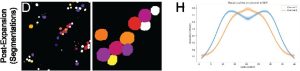
Figure 1D. Application of the StarDist segmentation model to the same optical section following expansion, enabling the identification of individual organelles for subsequent morphological analysis. Made available under a CC-BY 4.0 International license.
Single-organelle analysis reveals antibody trafficking differences
The authors tracked three anti-transferrin receptor (TfR) antibodies: bivalent (AbB), monovalent (AbM), and an AbM-GAA, which is basically an AbM linked to the enzyme alglucosidase alfa. Confocal imaging could not distinguish AbB from AbM in LAMP1 colocalization (preprint Figure 2A-B), but HiExM showed greater colocalization for AbB as early as 90 minutes (preprint Figure 2C-D). AbM-GAA showed the greatest volumetric overlap with LAMP1 segmentations (preprint Figure 2E-F). Per-organelle analysis revealed what bulk colocalization missed: AbB shifted the intensity distribution across all LELs, whereas AbM-GAA produced a lengthened tail, indicating accumulation in a smaller subset of LELs (preprint Figure 2G-H).
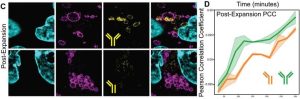
Figure 2C–D. HiExM-based analysis of antibody localization within late endosomes and lysosomes reveals differences in intracellular trafficking that are difficult to distinguish using conventional confocal microscopy. Made available under a CC-BY 4.0 International license.
Morphology and spatial organization are linked.
The authors measured five features per LEL: volume, distance from the nucleus, distance from the cell membrane, number of neighboring LELs, and connectivity. Across 89 cells, these sorted LELs into 14 clusters, and every cell contained most of them. This means that diversity exists within cells, not just between them (preprint Supplementary Figures 7-8). Larger LELs tended to be more connected, while peripheral ones were smaller and less connected (preprint Figure 3F).
Because these features were chosen in advance, the authors also trained a 3D variational autoencoder (VAE) on 100,000 LEL images, turning each into 256 numbers (preprint Figure 3C). This gave 16 morphologically distinct clusters (preprint Figure 3D). Several measured-learned pairings occurred more than two-fold above or below chance (preprint Figure 3E-F). For example, large LELs (measured cluster 7) were enriched for learned cluster J, which also corresponds to large organelles, suggesting that an LEL’s position and appearance are linked.
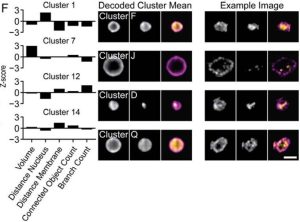
Figure 3F. Representative pairings of measured-feature clusters and learned-feature clusters reveal links between LEL spatial organization and morphology. Measured cluster 7, characterized by large organelles, is enriched for learned cluster J, which also represents large LELs. Each pairing combines a five-feature z-score profile with the decoded mean morphology and a representative organelle (scale bar: 1 µm). Made available under a CC-BY 4.0 International license.
Machine learning distinguishes lysosomal perturbations.
Cells were treated with apilimod, bafilomycin, or chloroquine, which disrupt lysosomes by different mechanisms, and compared with DMSO controls (preprint Figure 4A-C). With the five measured features, no cluster differed by more than two-fold between compounds (preprint Figure 4D). With learned features, several clusters were more than two-fold enriched or depleted (preprint Figure 4E). In short, the drugs rearrange LELs similarly in size and position but change their appearance differently, and only the learned features detected this.
One measured-learned pairing was depleted with chloroquine but enriched with bafilomycin or apilimod, so it could help tell the drugs apart (preprint Figure 4F-G). The authors also described each cell by the share of its LELs in each cluster, a compositional fingerprint of organelle state. Fingerprints from learned clusters separated treatments better than those from measured features (preprint Figure 4H-I). Organelle-level imaging could therefore give a richer readout of drug effects than narrow measures such as viability.
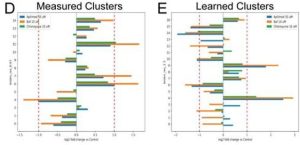
Figure 4D–E. Comparison of treatment-induced changes in measured-feature clusters (D) and learned-feature clusters (E) following apilimod, bafilomycin, or chloroquine treatment. Made available under a CC-BY 4.0 International license.
What I like about this preprint
The way this study approaches a blurry-image problem as a critical thinking exercise is what I find most appealing. The autoencoder learns what the measurements miss, segmentation makes each lysosome quantifiable, and HiExM allows the authors to visualize individual lysosomes. Learning, measuring, and seeing come together as one cohesive argument rather than three separate techniques.
What stands out to me most is how often a bulk average concealed meaningful differences. Standard confocal microscopy could not distinguish between the bivalent and monovalent anti-TfR antibodies, and even after enlargement, volumetric overlap suggested only that AbM-GAA was “more colocalized.” However, the per-organelle histograms revealed that this pattern was concentrated in a small subset of LELs. A single colocalization value averages away this variation. The drug experiments make a similar point: apilimod, bafilomycin, and chloroquine appeared almost identical in size and position, yet the learned features revealed distinct effects on lysosomes. In other words, two treatments can appear similar when measured in one way but differ when examined in greater detail.
My main hesitation is that the biological meaning of the learned clusters remains unclear. The study shows that the drugs affect lysosomes differently, but it is less clear what those differences represent biologically. I would be particularly interested to see whether the learned clusters correspond to LEL subpopulations with known molecular characteristics, as this could help explain what the model is actually detecting.
Future directions
The most obvious next step is linking the learned morphological states to function. LAMP1 is a broad marker, so the clusters show how LELs look rather than what they do. Mapping molecularly defined subpopulations onto the learned feature space would close that gap, with better universal stains and expansion-optimized antibodies to make it possible.
Future studies could also test whether the same morphology-position relationships hold in other cell types and extend the pipeline to mitochondria and nuclei, ideally imaging several organelle classes in the same cell. Finally, the authors’ own data suggest testing whether learned organelle features can predict outcomes in drug and antibody screening, not just describe them.
Questions for the authors
Q1: The machine-learning model found that the drugs change organelles in different ways, but we don’t know what those changes mean. How do you plan to figure out what each group of organelles actually does, for example, by adding stains for specific proteins?
Q2: You studied one type of cell. Do you think organelles look and sit the same way in other cell types, or might each cell type arrange its organelles differently for its own job?
Q3: Last but not least, could organelle-level learned representations serve as predictive phenotypic readouts for therapeutic screening, rather than only descriptive measurements?
References
1- Sahl, S. J., Hell, S. W., & Jakobs, S. (2017a, September 6). Fluorescence nanoscopy in cell biology. Nature News. https://www.nature.com/articles/nrm.2017.71
2- Klumperman, J., & Raposo, G. (2014). The complex ultrastructure of the endolysosomal system. Cold Spring Harbor Perspectives in Biology, 6(10). https://doi.org/10.1101/cshperspect.a016857
3- Bussi, C., & Gutierrez, M. G. (2024a). One size does not fit all: Lysosomes exist in biochemically and functionally distinct states. PLOS Biology, 22(3). https://doi.org/10.1371/journal.pbio.3002576
4- Bond, C., Hugelier, S., Xing, J., Sorokina, E. M., & Lakadamyali, M. (2025, January 6). Heterogeneity of late endosome/lysosomes shown by multiplexed DNA-paint imaging. The Journal of Cell Biology. https://pmc.ncbi.nlm.nih.gov/articles/PMC11533445
5- Chen, F., Tillberg, P. W., & Boyden, E. S. (2015). Expansion microscopy. Science, 347(6221), 543–548. https://doi.org/10.1126/science.1260088
6- Day, J. H., Della Santina, C. M., Maretich, P., Auld, A. L., Schnieder, K. K., Shin, T., Boyden, E. S., & Boyer, L. A. (2024). HiExM: High-Throughput Expansion Microscopy Enables Scalable Super-Resolution Imaging. https://doi.org/10.7554/elife.96025.3
Read preprintSign up to customise the site to your preferences and to receive alerts
Register hereAlso in the bioinformatics category:
AI semantics for biomedical data integration
Theodora Stougiannou

Clonal embeddings allow exploratory analysis of lineage-resolved single-cell data
Marine Secchi
Additive baselines furnish no evidence for epistasis learning by MULTI-evolve
Leonie Brüne
Also in the cell biology category:
HiExM Enables Scalable Mapping of Organelle Morphology and Spatial Heterogeneity
Dina Kabbara

Fast single molecule localization microscopy in 3D
Kanishka Parashar
Microglia extract neuronal proteolytic organelles via skoupocytosis
Chandrika Rao
preLists in the bioinformatics category:
Keystone Symposium – Metabolic and Nutritional Control of Development and Cell Fate
This preList contains preprints discussed during the Metabolic and Nutritional Control of Development and Cell Fate Keystone Symposia. This conference was organized by Lydia Finley and Ralph J. DeBerardinis and held in the Wylie Center and Tupper Manor at Endicott College, Beverly, MA, United States from May 7th to 9th 2025. This meeting marked the first in-person gathering of leading researchers exploring how metabolism influences development, including processes like cell fate, tissue patterning, and organ function, through nutrient availability and metabolic regulation. By integrating modern metabolic tools with genetic and epidemiological insights across model organisms, this event highlighted key mechanisms and identified open questions to advance the emerging field of developmental metabolism.
| List by | Virginia Savy, Martin Estermann |
‘In preprints’ from Development 2022-2023
A list of the preprints featured in Development's 'In preprints' articles between 2022-2023
| List by | Alex Eve, Katherine Brown |
9th International Symposium on the Biology of Vertebrate Sex Determination
This preList contains preprints discussed during the 9th International Symposium on the Biology of Vertebrate Sex Determination. This conference was held in Kona, Hawaii from April 17th to 21st 2023.
| List by | Martin Estermann |
Alumni picks – preLights 5th Birthday
This preList contains preprints that were picked and highlighted by preLights Alumni - an initiative that was set up to mark preLights 5th birthday. More entries will follow throughout February and March 2023.
| List by | Sergio Menchero et al. |
Fibroblasts
The advances in fibroblast biology preList explores the recent discoveries and preprints of the fibroblast world. Get ready to immerse yourself with this list created for fibroblasts aficionados and lovers, and beyond. Here, my goal is to include preprints of fibroblast biology, heterogeneity, fate, extracellular matrix, behavior, topography, single-cell atlases, spatial transcriptomics, and their matrix!
| List by | Osvaldo Contreras |
Single Cell Biology 2020
A list of preprints mentioned at the Wellcome Genome Campus Single Cell Biology 2020 meeting.
| List by | Alex Eve |
Antimicrobials: Discovery, clinical use, and development of resistance
Preprints that describe the discovery of new antimicrobials and any improvements made regarding their clinical use. Includes preprints that detail the factors affecting antimicrobial selection and the development of antimicrobial resistance.
| List by | Zhang-He Goh |
Also in the cell biology category:
‘In preprints’ from Development 2026
A list of the preprints featured in Development's 'In preprints' articles, as part of the new Preprint Editors initiative
| List by | Clarisse Brunet Avalos et al. |
Sainsbury Laboratory Symposium 2026
The Sainsbury Laboratory Symposium 2026, Shaping Life: Mechanisms of Morphogenesis, brought together researchers exploring the cellular, genetic and mechanical processes that shape plant form. This preList highlights preprints that were discussed or mentioned at the meeting. If you notice any missing preprints, please contact us at preLights@biologists.com
| List by | Ingrid Tsang |
Santa Cruz Developmental Biology Meeting 2026
This preList brings together a selection of preprints discussed at the Santa Cruz Developmental Biology Meeting 2026, held at UC Santa Cruz with the theme “Biomedicine, Biomechanics, and the Biosphere.” Reflecting the meeting’s broad scientific scope, from development and regeneration to evolution, tissue mechanics, and emerging technologies, this curated collection showcases work that contributed to conversations throughout the meeting.
| List by | Ingrid Tsang |
Developmental regulation: molecular and ecological niches
This conference was held at the Station Biologique de Roscoff (France) and brought together researchers exploring how diverse niche environments shape developmental processes across scales. Spanning topics from ecological and metabolic influences to signalling networks, mechanics and gene regulation, the meeting highlighted the interplay between intrinsic and extrinsic factors in controlling cell fate and tissue organisation. This preList gathers preprints discussed by speakers and poster presenters during the meeting. Please do get in touch at preLights@biologists.com if you notice any relevant preprints that we may have missed.
| List by | Ingrid Tsang |
preLighters’ choice – Handpicked DevBio preprints
preLighters with expertise across developmental and stem cell biology have nominated a few developmental biology (and related) preprints they’re excited about and explain in a few paragraph why. Concise preprint highlights, prepared by the preLighter community – a quick way to spot upcoming trends, new methods and fresh ideas.
| List by | Theodora Stougiannou et al. |
BSDB Spring Meeting: Molecules to Morphogenesis
The British Society for Developmental Biology (BSDB) Spring Meeting Molecules to Morphogenesis was held from 23–26 March 2026 at the University of Warwick (UK). This meeting brought together a vibrant community of researchers to discuss how molecular mechanisms are integrated across scales to drive morphogenesis, spanning diverse model systems and approaches. This preList contains preprints by presenters from the talk and poster sessions at the meeting. Please do get in touch at preLights@biologists.com if you notice any relevant preprints that we may have missed.
| List by | Ingrid Tsang |
Keystone Symposium on Stem Cell Models in Embryology 2026
The Keystone Symposium on Stem Cell Models in Embryology, 2026, was organised by Jun Wu (UT Southwestern), Jianping Fu (University of Michigan) and Miki Ebisuya (TU Dresden) and held at Asilomar Conference Grounds in California (US). The meeting discussed recent advances made in establishing stem-cell-based embryo models, what fundamental insights into developmental processes have been gleaned from them, as well as how they are beginning to be applied more widely. This prelist contains preprints by presenters at the talk and poster sessions at the conference, which our Reviews Editor in attendance spotted. Please do reach out to preLights@biologists.com if you notice any that we’ve missed.
| List by | Ingrid Tsang |
SciELO preprints – From 2025 onwards
SciELO has become a cornerstone of open, multilingual scholarly communication across Latin America. Its preprint server, SciELO preprints, is expanding the global reach of preprinted research from the region (for more information, see our interview with Carolina Tanigushi). This preList brings together biological, English language SciELO preprints to help readers discover emerging work from the Global South. By highlighting these preprints in one place, we aim to support visibility, encourage early feedback, and showcase the vibrant research communities contributing to SciELO’s open science ecosystem.
| List by | Carolina Tanigushi |
November in preprints – DevBio & Stem cell biology
preLighters with expertise across developmental and stem cell biology have nominated a few developmental and stem cell biology (and related) preprints posted in November they’re excited about and explain in a single paragraph why. Concise preprint highlights, prepared by the preLighter community – a quick way to spot upcoming trends, new methods and fresh ideas.
| List by | Aline Grata et al. |
October in preprints – DevBio & Stem cell biology
Each month, preLighters with expertise across developmental and stem cell biology nominate a few recent developmental and stem cell biology (and related) preprints they’re excited about and explain in a single paragraph why. Short, snappy picks from working scientists — a quick way to spot fresh ideas, bold methods and papers worth reading in full. These preprints can all be found in the October preprint list published on the Node.
| List by | Deevitha Balasubramanian et al. |
October in preprints – Cell biology edition
Different preLighters, with expertise across cell biology, have worked together to create this preprint reading list for researchers with an interest in cell biology. This month, most picks fall under (1) Cell organelles and organisation, followed by (2) Mechanosignaling and mechanotransduction, (3) Cell cycle and division and (4) Cell migration
| List by | Matthew Davies et al. |
September in preprints – Cell biology edition
A group of preLighters, with expertise in different areas of cell biology, have worked together to create this preprint reading list. This month, categories include: (1) Cell organelles and organisation, (2) Cell signalling and mechanosensing, (3) Cell metabolism, (4) Cell cycle and division, (5) Cell migration
| List by | Sristilekha Nath et al. |
July in preprints – the CellBio edition
A group of preLighters, with expertise in different areas of cell biology, have worked together to create this preprint reading lists for researchers with an interest in cell biology. This month, categories include: (1) Cell Signalling and Mechanosensing (2) Cell Cycle and Division (3) Cell Migration and Cytoskeleton (4) Cancer Biology (5) Cell Organelles and Organisation
| List by | Girish Kale et al. |
June in preprints – the CellBio edition
A group of preLighters, with expertise in different areas of cell biology, have worked together to create this preprint reading lists for researchers with an interest in cell biology. This month, categories include: (1) Cell organelles and organisation (2) Cell signaling and mechanosensation (3) Genetics/gene expression (4) Biochemistry (5) Cytoskeleton
| List by | Barbora Knotkova et al. |
May in preprints – the CellBio edition
A group of preLighters, with expertise in different areas of cell biology, have worked together to create this preprint reading lists for researchers with an interest in cell biology. This month, categories include: 1) Biochemistry/metabolism 2) Cancer cell Biology 3) Cell adhesion, migration and cytoskeleton 4) Cell organelles and organisation 5) Cell signalling and 6) Genetics
| List by | Barbora Knotkova et al. |
Keystone Symposium – Metabolic and Nutritional Control of Development and Cell Fate
This preList contains preprints discussed during the Metabolic and Nutritional Control of Development and Cell Fate Keystone Symposia. This conference was organized by Lydia Finley and Ralph J. DeBerardinis and held in the Wylie Center and Tupper Manor at Endicott College, Beverly, MA, United States from May 7th to 9th 2025. This meeting marked the first in-person gathering of leading researchers exploring how metabolism influences development, including processes like cell fate, tissue patterning, and organ function, through nutrient availability and metabolic regulation. By integrating modern metabolic tools with genetic and epidemiological insights across model organisms, this event highlighted key mechanisms and identified open questions to advance the emerging field of developmental metabolism.
| List by | Virginia Savy, Martin Estermann |
April in preprints – the CellBio edition
A group of preLighters, with expertise in different areas of cell biology, have worked together to create this preprint reading lists for researchers with an interest in cell biology. This month, categories include: 1) biochemistry/metabolism 2) cell cycle and division 3) cell organelles and organisation 4) cell signalling and mechanosensing 5) (epi)genetics
| List by | Vibha SINGH et al. |
March in preprints – the CellBio edition
A group of preLighters, with expertise in different areas of cell biology, have worked together to create this preprint reading lists for researchers with an interest in cell biology. This month, categories include: 1) cancer biology 2) cell migration 3) cell organelles and organisation 4) cell signalling and mechanosensing 5) genetics and genomics 6) other
| List by | Girish Kale et al. |
Biologists @ 100 conference preList
This preList aims to capture all preprints being discussed at the Biologists @100 conference in Liverpool, UK, either as part of the poster sessions or the (flash/short/full-length) talks.
| List by | Reinier Prosee, Jonathan Townson |
February in preprints – the CellBio edition
A group of preLighters, with expertise in different areas of cell biology, have worked together to create this preprint reading lists for researchers with an interest in cell biology. This month, categories include: 1) biochemistry and cell metabolism 2) cell organelles and organisation 3) cell signalling, migration and mechanosensing
| List by | Barbora Knotkova et al. |
Community-driven preList – Immunology
In this community-driven preList, a group of preLighters, with expertise in different areas of immunology have worked together to create this preprint reading list.
| List by | Felipe Del Valle Batalla et al. |
January in preprints – the CellBio edition
A group of preLighters, with expertise in different areas of cell biology, have worked together to create this preprint reading lists for researchers with an interest in cell biology. This month, categories include: 1) biochemistry/metabolism 2) cell migration 3) cell organelles and organisation 4) cell signalling and mechanosensing 5) genetics/gene expression
| List by | Barbora Knotkova et al. |
December in preprints – the CellBio edition
A group of preLighters, with expertise in different areas of cell biology, have worked together to create this preprint reading lists for researchers with an interest in cell biology. This month, categories include: 1) cell cycle and division 2) cell migration and cytoskeleton 3) cell organelles and organisation 4) cell signalling and mechanosensing 5) genetics/gene expression
| List by | Matthew Davies et al. |
November in preprints – the CellBio edition
This is the first community-driven preList! A group of preLighters, with expertise in different areas of cell biology, have worked together to create this preprint reading lists for researchers with an interest in cell biology. Categories include: 1) cancer cell biology 2) cell cycle and division 3) cell migration and cytoskeleton 4) cell organelles and organisation 5) cell signalling and mechanosensing 6) genetics/gene expression
| List by | Felipe Del Valle Batalla et al. |
BSCB-Biochemical Society 2024 Cell Migration meeting
This preList features preprints that were discussed and presented during the BSCB-Biochemical Society 2024 Cell Migration meeting in Birmingham, UK in April 2024. Kindly put together by Sara Morais da Silva, Reviews Editor at Journal of Cell Science.
| List by | Reinier Prosee |
‘In preprints’ from Development 2022-2023
A list of the preprints featured in Development's 'In preprints' articles between 2022-2023
| List by | Alex Eve, Katherine Brown |
preLights peer support – preprints of interest
This is a preprint repository to organise the preprints and preLights covered through the 'preLights peer support' initiative.
| List by | preLights peer support |
The Society for Developmental Biology 82nd Annual Meeting
This preList is made up of the preprints discussed during the Society for Developmental Biology 82nd Annual Meeting that took place in Chicago in July 2023.
| List by | Joyce Yu, Katherine Brown |
CSHL 87th Symposium: Stem Cells
Preprints mentioned by speakers at the #CSHLsymp23
| List by | Alex Eve |
Journal of Cell Science meeting ‘Imaging Cell Dynamics’
This preList highlights the preprints discussed at the JCS meeting 'Imaging Cell Dynamics'. The meeting was held from 14 - 17 May 2023 in Lisbon, Portugal and was organised by Erika Holzbaur, Jennifer Lippincott-Schwartz, Rob Parton and Michael Way.
| List by | Helen Zenner |
9th International Symposium on the Biology of Vertebrate Sex Determination
This preList contains preprints discussed during the 9th International Symposium on the Biology of Vertebrate Sex Determination. This conference was held in Kona, Hawaii from April 17th to 21st 2023.
| List by | Martin Estermann |
Alumni picks – preLights 5th Birthday
This preList contains preprints that were picked and highlighted by preLights Alumni - an initiative that was set up to mark preLights 5th birthday. More entries will follow throughout February and March 2023.
| List by | Sergio Menchero et al. |
CellBio 2022 – An ASCB/EMBO Meeting
This preLists features preprints that were discussed and presented during the CellBio 2022 meeting in Washington, DC in December 2022.
| List by | Nadja Hümpfer et al. |
Fibroblasts
The advances in fibroblast biology preList explores the recent discoveries and preprints of the fibroblast world. Get ready to immerse yourself with this list created for fibroblasts aficionados and lovers, and beyond. Here, my goal is to include preprints of fibroblast biology, heterogeneity, fate, extracellular matrix, behavior, topography, single-cell atlases, spatial transcriptomics, and their matrix!
| List by | Osvaldo Contreras |
EMBL Synthetic Morphogenesis: From Gene Circuits to Tissue Architecture (2021)
A list of preprints mentioned at the #EESmorphoG virtual meeting in 2021.
| List by | Alex Eve |
FENS 2020
A collection of preprints presented during the virtual meeting of the Federation of European Neuroscience Societies (FENS) in 2020
| List by | Ana Dorrego-Rivas |
Planar Cell Polarity – PCP
This preList contains preprints about the latest findings on Planar Cell Polarity (PCP) in various model organisms at the molecular, cellular and tissue levels.
| List by | Ana Dorrego-Rivas |
BioMalPar XVI: Biology and Pathology of the Malaria Parasite
[under construction] Preprints presented at the (fully virtual) EMBL BioMalPar XVI, 17-18 May 2020 #emblmalaria
| List by | Dey Lab, Samantha Seah |
1
Cell Polarity
Recent research from the field of cell polarity is summarized in this list of preprints. It comprises of studies focusing on various forms of cell polarity ranging from epithelial polarity, planar cell polarity to front-to-rear polarity.
| List by | Yamini Ravichandran |
TAGC 2020
Preprints recently presented at the virtual Allied Genetics Conference, April 22-26, 2020. #TAGC20
| List by | Maiko Kitaoka et al. |
3D Gastruloids
A curated list of preprints related to Gastruloids (in vitro models of early development obtained by 3D aggregation of embryonic cells). Updated until July 2021.
| List by | Paul Gerald L. Sanchez and Stefano Vianello |
ECFG15 – Fungal biology
Preprints presented at 15th European Conference on Fungal Genetics 17-20 February 2020 Rome
| List by | Hiral Shah |
ASCB EMBO Annual Meeting 2019
A collection of preprints presented at the 2019 ASCB EMBO Meeting in Washington, DC (December 7-11)
| List by | Madhuja Samaddar et al. |
EMBL Seeing is Believing – Imaging the Molecular Processes of Life
Preprints discussed at the 2019 edition of Seeing is Believing, at EMBL Heidelberg from the 9th-12th October 2019
| List by | Dey Lab |
Autophagy
Preprints on autophagy and lysosomal degradation and its role in neurodegeneration and disease. Includes molecular mechanisms, upstream signalling and regulation as well as studies on pharmaceutical interventions to upregulate the process.
| List by | Sandra Malmgren Hill |
Lung Disease and Regeneration
This preprint list compiles highlights from the field of lung biology.
| List by | Rob Hynds |
Cellular metabolism
A curated list of preprints related to cellular metabolism at Biorxiv by Pablo Ranea Robles from the Prelights community. Special interest on lipid metabolism, peroxisomes and mitochondria.
| List by | Pablo Ranea Robles |
BSCB/BSDB Annual Meeting 2019
Preprints presented at the BSCB/BSDB Annual Meeting 2019
| List by | Dey Lab |
MitoList
This list of preprints is focused on work expanding our knowledge on mitochondria in any organism, tissue or cell type, from the normal biology to the pathology.
| List by | Sandra Franco Iborra |
Biophysical Society Annual Meeting 2019
Few of the preprints that were discussed in the recent BPS annual meeting at Baltimore, USA
| List by | Joseph Jose Thottacherry |
ASCB/EMBO Annual Meeting 2018
This list relates to preprints that were discussed at the recent ASCB conference.
| List by | Dey Lab, Amanda Haage |